Serbia is moving further away from the European Union (EU), and this has become particularly evident since the end of 2025, when, according to the assessment of the prEUgovor Coalition, even the simulation of reform activities came to an end.
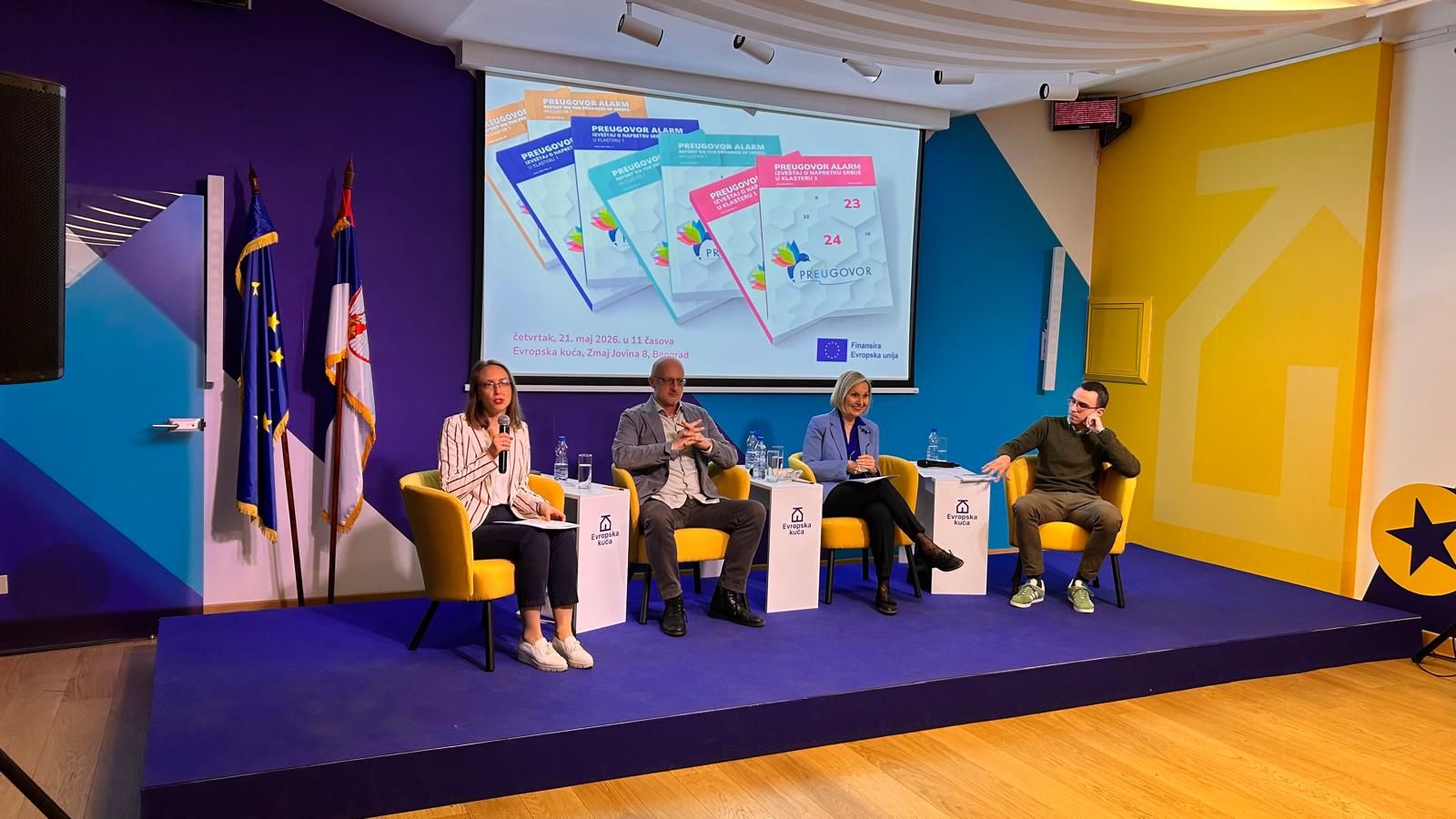
At a panel held at the European House during the presentation of the Alarm Report on Cluster 1, participants concluded that laws are being adopted without meaningful public debate, without consultations with relevant institutions, and without genuine alignment with European standards.
Jelena Pejić Nikić from the Belgrade Centre for Security Policy (BCSP), editor of the report and moderator of the panel, stated that Serbia has begun to reverse reforms that had previously been adopted, pointing in particular to the latest judicial laws.
She assessed that laws are currently being adopted in Serbia that are not aligned with recommendations, international agreements, and European standards. According to her, this may also affect the absence of positive news from Brussels, especially regarding the disbursement of funds from the Growth Plan for the Western Balkans. Pejić Nikić welcomed the EU’s sharper responses to negative developments in the country, while highlighting Serbia’s operational membership in the Single Euro Payments Area (SEPA) as of May this year as a rare positive event.
Authorities Move to Shut the Public Out of Lawmaking
Nemanja Nenadić from Transparency Serbia emphasized that the authorities, under the pretext of accelerating the fulfillment of obligations arising from the European integration process, are adopting regulations without prior analysis and consultations. “The authorities are doing everything to completely exclude the public from consultations and from the process of fulfilling obligations from the Reform Agenda, while preventing access to planning documents, and EU institutions and member states should react to this,” Nenadić said.
.jpeg)
The panel also addressed electoral conditions, which were assessed as deteriorating despite the recommendations of OSCE Office for Democratic Institutions and Human Rights (ODIHR). Participants stated that the authorities adopt only those recommendations that do not affect key mechanisms of political control.
Speaking about the financing of election campaigns, Nenadić assessed that the proposed limits are excessively high and further contribute to inequality among political actors. This was particularly evident in the recent local elections, where the ruling party’s reported campaign expenses were between 10 and 50 times higher than those of its competitors, he explained.
Escalating Hate Speech and Political Discrimination
Tanja Ignjatović from the Autonomous Women’s Center assessed that public debates are being concealed from the public and carried out only formally. “The working group for the amendments to the Family Law met only once, and the draft was presented immediately afterward, which indicates that the discussion was not genuine. There was no time for comments to be considered,” Ignjatović stated. She added that although the number of femicides decreased in 2025, it is particularly concerning that the proportion of cases in which violence had previously been reported increased, indicating that institutions are still failing to respond adequately.
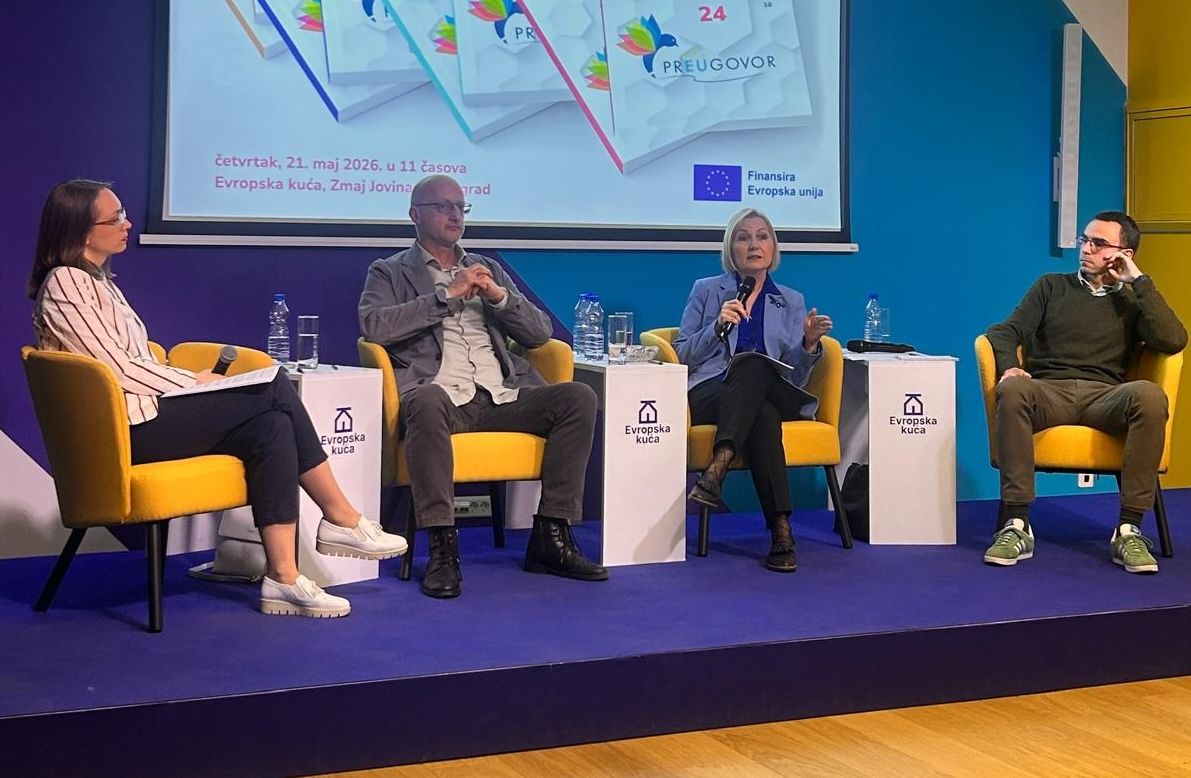
The report also points to violations of human rights and a decline in the protection of civil liberties. Ignjatović assessed that hate speech in the public sphere is intensifying, particularly in pro-government media outlets, while pressure on people expressing political opinions is becoming increasingly frequent.
Police Brutality Goes Unpunished — and Is Rewarded
Miloš Jovanović from the Belgrade Centre for Security Policy spoke about the third Draft Law on Internal Affairs, assessing that it further entrenches the politicisation of the police and weakens democratic civilian oversight of its work, to the detriment of human rights and freedoms. He added that BCSP had submitted 48 comments on the Draft Law, of which only six were accepted and five partially accepted — only those preserving more precise wording from the current law. Jovanović assessed that personnel changes within the police demonstrate that it is becoming increasingly subordinated to political rather than public interests.
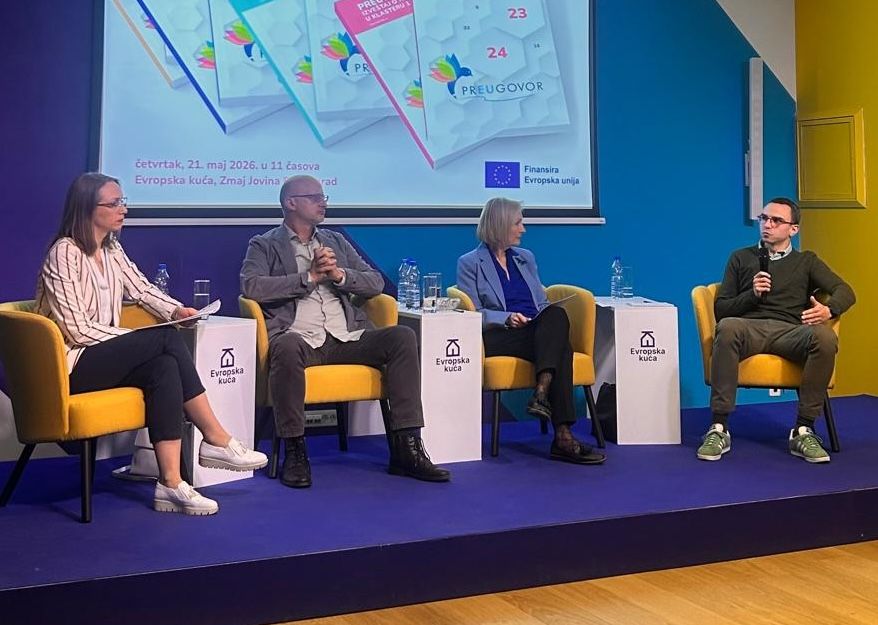
Jovanović also referred to cases of police brutality, assessing that they most often go unpunished. The report also covers police conduct during protests, local elections and raids on university faculties. “Serbia lacks a strategy for combating organized crime, while prosecutors working on sensitive cases are exposed to pressure and obstruction,” he added, with particular reference to the harmful consequences of the so-called “Mrdić Laws”.
The participants of the panel concluded that the authorities in Serbia do not demonstrate genuine political will to fulfill EU recommendations, but instead seek to create an illusion of progress while avoiding transparency, public debate, and the harmonization of laws with European standards.
The article was prepared by BCSP intern Teodora Podunavac.
.jpeg)